What Is Hard Water and How Does It Affect Your Home?
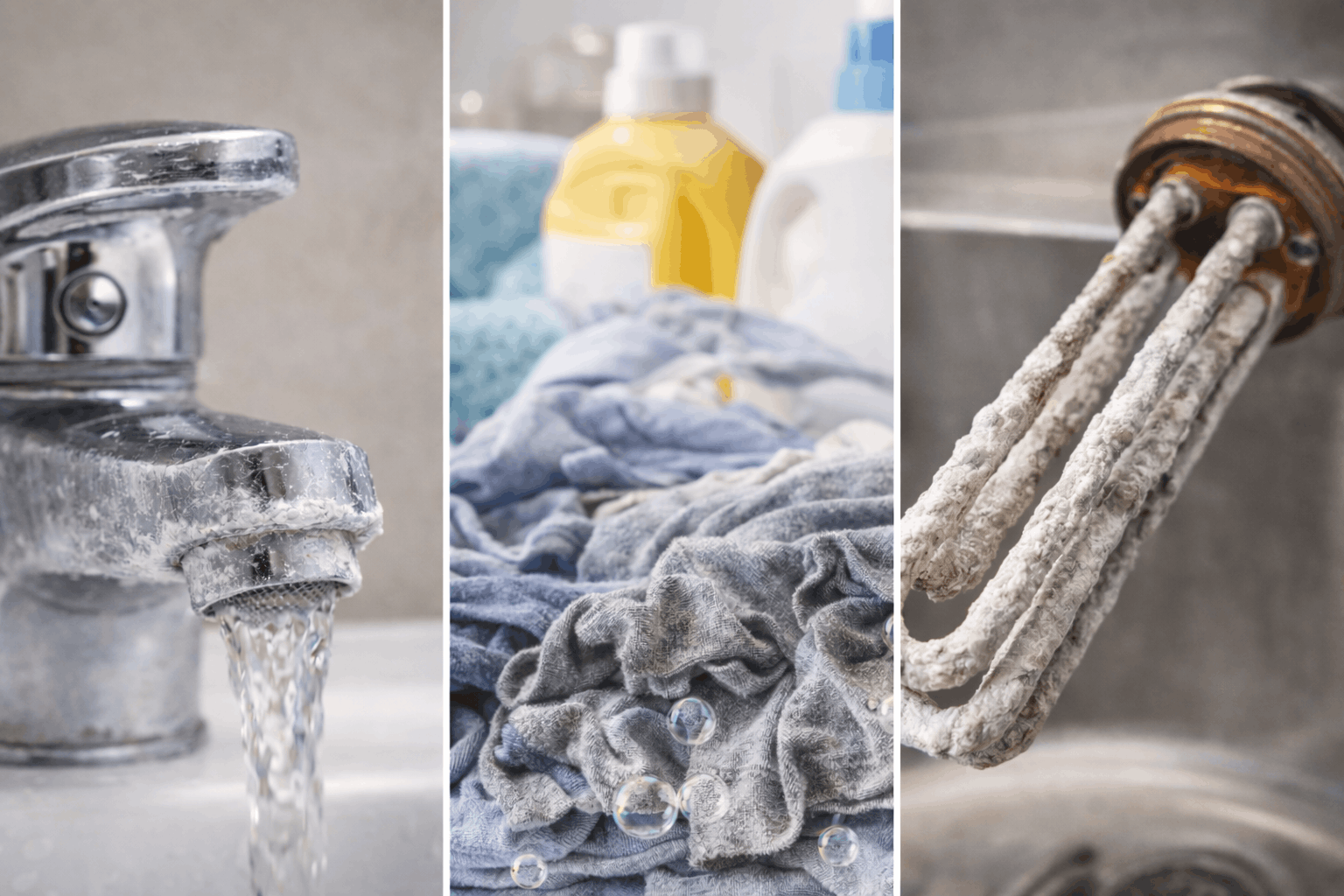
Many Ontario homeowners live with hard water without realizing it. The effects often show up gradually through scale buildup, reduced appliance efficiency, and everyday frustrations that feel normal over time.
Hard water is not a health concern in most cases, but it can have a noticeable impact on comfort, cleaning results, plumbing, and long-term home maintenance. Understanding what hard water is and how it affects your home is the first step toward deciding whether treatment makes sense.
What Is Hard Water?
Hard water contains elevated levels of dissolved minerals, primarily calcium and magnesium. These minerals are naturally picked up as water moves through soil and rock before entering municipal systems or private wells.
In Ontario, hard water is extremely common due to regional geology. Even treated municipal water supplies often remain hard because mineral content is not typically removed during standard water treatment.
While hard water is safe to use, its mineral content can create ongoing issues throughout the home.
Common Signs of Hard Water in Ontario Homes
Hard water often reveals itself through visible and functional signs.
White or chalky residue on faucets, shower doors, and fixtures is one of the most common indicators. This residue, known as scale, can be difficult to remove and tends to return quickly after cleaning.
Soap and shampoo may feel less effective, producing less lather and leaving skin or hair feeling dry. Laundry may appear stiff or dull, even when freshly washed.
Over time, mineral buildup can accumulate inside plumbing and appliances, contributing to reduced efficiency and increased wear.
How Hard Water Affects Plumbing and Appliances
Mineral scale does not only appear on surfaces. It can also form inside pipes, water heaters, dishwashers, and washing machines.
As scale builds up, appliances may require more energy to operate effectively. Water heaters, in particular, can lose efficiency as heating elements become coated with mineral deposits.
Addressing hard water at the source helps protect plumbing systems and appliances while improving overall water performance. This is why many homeowners explore whole-home water softening systems rather than treating symptoms individually.
When Should You Consider Treating Hard Water?
Hard water treatment is worth considering when scale buildup, reduced appliance performance, or cleaning challenges become consistent issues.
Rather than relying on guesswork, testing provides clarity on water hardness levels and whether treatment would offer meaningful benefits. A free in-home water test allows homeowners to see how hard their water is and understand available options based on actual results.
Hard water is common in Ontario homes, but its effects do not have to be accepted as unavoidable. Understanding how mineral content impacts daily life makes it easier to decide whether treatment aligns with your home’s needs and long-term goals.
With the right information, homeowners can choose solutions that improve comfort, protect appliances, and support consistent water quality throughout the home.