Why Not All Water Softening Systems Work the Same Way
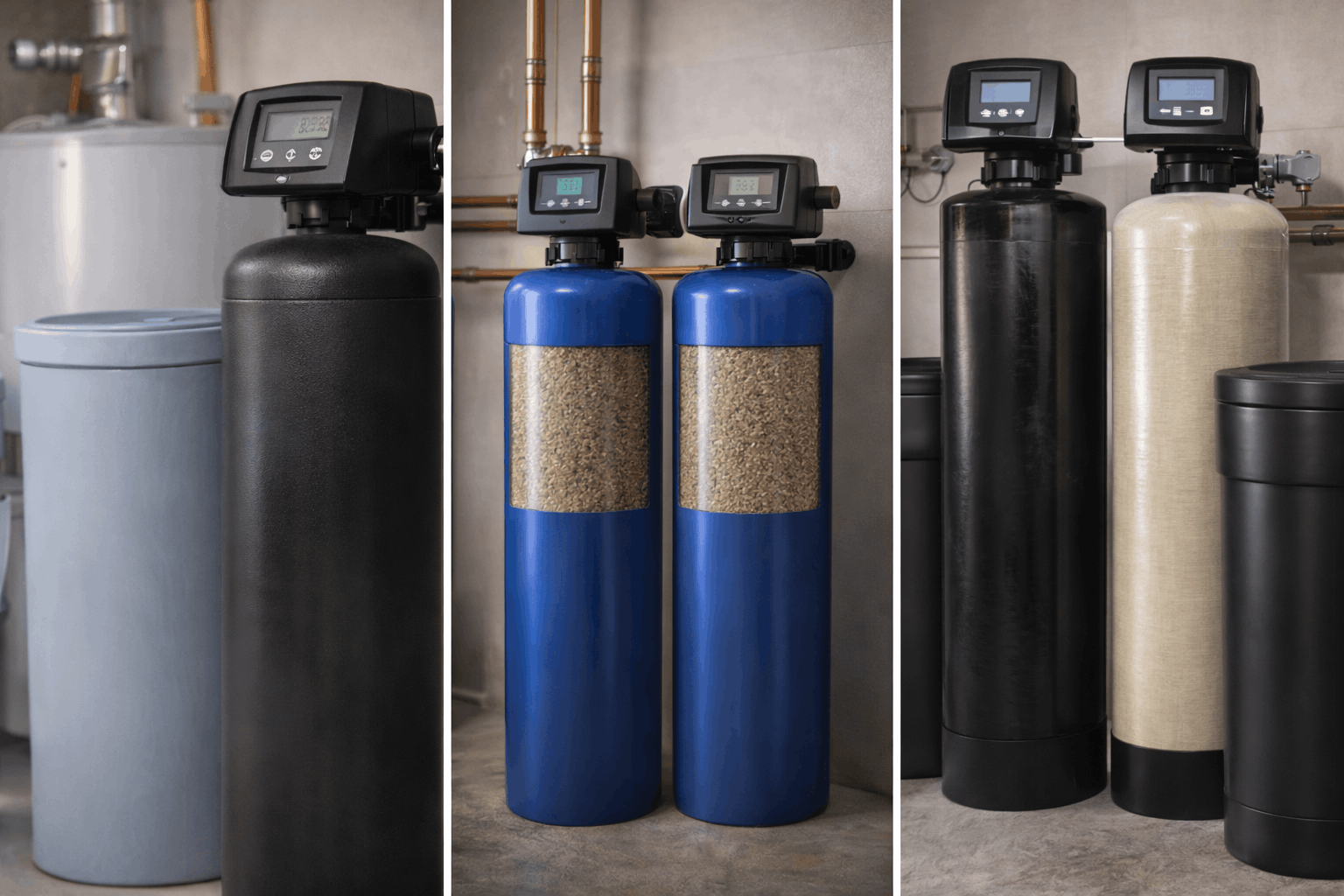
Homeowners researching solutions for hard water are often surprised by how many different systems exist, all described using similar terms. Water softeners, water conditioners, and newer hybrid systems are frequently grouped together, even though they operate in very different ways.
Understanding how these systems work, and why not all water softening approaches are the same, helps homeowners choose a solution that actually aligns with their water conditions and long-term expectations.
Traditional Water Softeners: What They Do Well
Traditional water softeners are designed to address hard water by removing calcium and magnesium from the water supply. This is typically done through an ion exchange process, where hardness minerals are exchanged for sodium or potassium ions.
By removing these minerals, softened water reduces scale buildup, improves soap effectiveness, and helps protect plumbing and appliances. In areas with consistently hard water, this approach has been used for decades with reliable results.
However, not all softeners are built the same, and system design, regeneration method, and efficiency can vary widely.
Water Conditioners and Why Definitions Get Confusing
Water conditioners are often described as systems that reduce the effects of hard water rather than removing minerals entirely. Some conditioners aim to alter how minerals behave so they are less likely to stick to surfaces, helping reduce visible scale.
The challenge is that the term “conditioner” is used broadly across the industry. Some systems marketed as conditioners do not regenerate, do not flush mineral buildup, and do not deliver consistent results in all water conditions.
This is where confusion arises for homeowners comparing systems that appear similar on the surface but function very differently in practice.
Modern Hybrid Systems: Conditioning and Softening Together
Modern water treatment systems have evolved beyond simple labels. Some whole-home systems are designed to both manage hardness and condition water through regeneration and controlled mineral handling.
Systems such as CitySoft for municipal water supplies and CountrySoft for rural or well water environments are examples of this modern approach. These systems use salt-assisted operation and regeneration to flush mineral buildup away while improving overall water performance throughout the home.
Rather than fitting neatly into outdated categories, hybrid systems focus on outcomes: reduced scale, improved efficiency, and consistent water quality across all points of use.
Choosing the Right System for Your Home
The best water softening solution depends on your home’s water source, hardness levels, and usage patterns.
Homes with higher hardness levels or ongoing scale issues often require systems that actively regenerate and manage mineral buildup. In these cases, understanding how a system handles regeneration, maintenance, and long-term performance is more important than the label attached to it.
A free in-home water test provides clarity on hardness levels and helps identify which type of system is best suited to your specific water conditions.
Not all water softening systems work the same way, even if they are described using similar terms. Understanding the differences between traditional softeners, basic conditioners, and modern hybrid systems helps homeowners make informed decisions without relying on outdated definitions.
With proper testing and guidance, it becomes easier to choose a solution that delivers consistent results, protects your home, and aligns with long-term water quality goals.