
Indoor air quality guide
What’s really in the air inside your home?
Most indoor air quality issues aren’t dramatic. They’re gradual, invisible, and influenced by how modern homes are built and lived in.
The air inside your home is shaped by everyday activities — cooking, cleaning, heating, cooling, and simply living. Over time, small particles and compounds can accumulate, especially in tightly sealed, energy-efficient homes. Common ones include dust mites, pet dander, mold spores, VOCs, cooking particles, pollen, and wildfire smoke.
Understanding what’s present is the first step toward improving it. Free in-home air test: about 30 minutes, no cost, and no obligation. Serving London and Southwestern Ontario since 1999.
Why indoor air matters
We spend most of our lives indoors
According to Health Canada, Canadians spend approximately 90% of their time indoors — at home, at work, or in other enclosed environments. That means indoor air quality often has a greater impact on long-term exposure than outdoor air.
Modern homes are built differently than they were decades ago:
- Improved insulation
- Sealed building envelopes
- High-performance windows
- Reduced natural air leakage
These changes increase energy efficiency and comfort. But they also change how air moves through a home.
Instead of naturally cycling out, air is often recirculated — allowing airborne particles and compounds to linger longer than many people realize.
Common indoor air pollutants
What’s commonly found in indoor air
Indoor air is a mixture of many different substances. Most are byproducts of normal daily living.
Biological particles
- Dust mites
- Pet dander
- Mold spores
- Bacteria
These microscopic particles can become airborne through movement, airflow, and everyday activity.
Chemical compounds (VOCs)
Volatile Organic Compounds (VOCs) can be released from:
- Furniture
- Flooring
- Paints & adhesives
- Cleaning products
- Synthetic materials
These compounds are often odorless and released slowly over time.
Combustion & smoke
- Cooking particles
- Gas stove emissions
- Tobacco smoke
- Burning candles
Fine particulate matter generated during cooking and combustion can remain suspended in the air, particularly in homes with limited ventilation.
Outdoor infiltration
Outdoor pollutants can also enter the home, including:
- Pollen
- Wildfire smoke
- Urban particulate matter
Even well-sealed homes experience some level of infiltration through ventilation systems and entry points.
Air exchange
How energy-efficient homes changed airflow
Today’s homes are significantly more airtight than older construction. While this improves heating and cooling efficiency, it also reduces natural air exchange.
Air exchange refers to how frequently indoor air is replaced with fresh outdoor air.
In tightly sealed homes:
- Air recirculates more than it refreshes
- Particles remain suspended longer
- Odors and moisture can linger
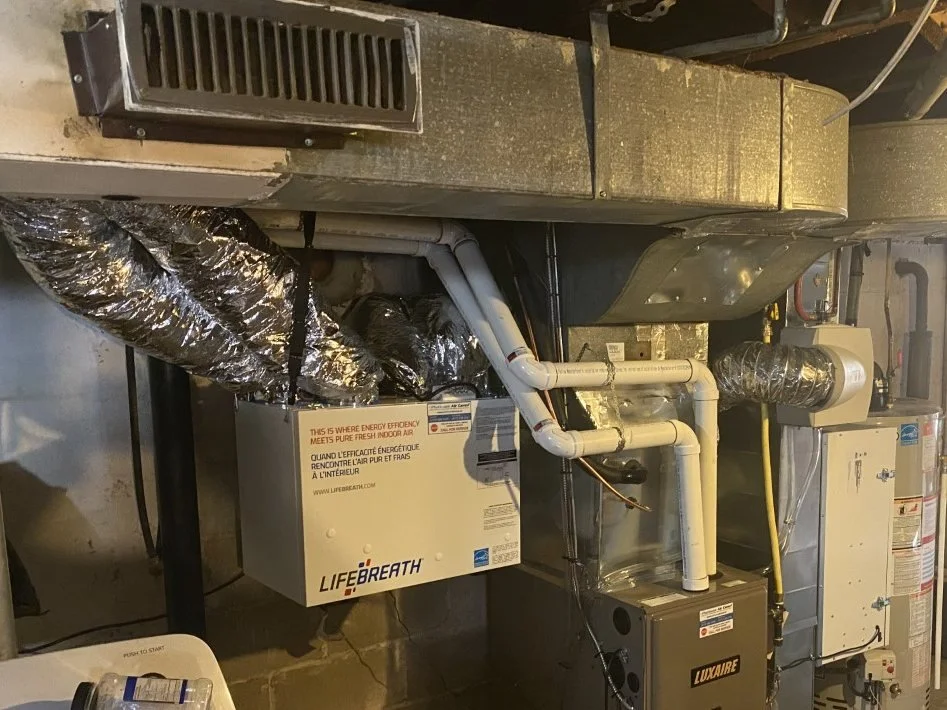
Mechanical ventilation systems such as HRVs (Heat Recovery Ventilators) and ERVs (Energy Recovery Ventilators) are designed to manage airflow intentionally — but not all homes are equipped with them.
The way air moves through a home directly affects how long airborne substances remain present.
Work out a room’s air changes per hour with the ACH calculator
Indoor vs. outdoor air
Indoor air quality (IAQ)
According to the Environmental Protection Agency, levels of several common organic pollutants average 2 to 5 times higher inside our homes than outside. During and for several hours after certain activities, such as paint stripping, levels can reach 1,000 times outdoor levels.
Health and comfort
How indoor air can affect health
Air doesn’t simply pass through a space — it interacts with the people living inside it.
The average person breathes roughly 20,000 times per day. Over time, consistent exposure to airborne particles and compounds can influence:
- Respiratory comfort
- Allergy sensitivity
- Sleep quality
- Odor perception
- Overall indoor comfort
For infants, older adults, and individuals with asthma or respiratory sensitivities, indoor air conditions may feel more noticeable.
Many indoor air concerns are subtle rather than dramatic — which is why they’re often overlooked. Dust, dander, and pollen are the things most people react to, so less of them in your air can only help.
Signs to look for
When to consider improving indoor air quality
You may want to evaluate your indoor air if you notice:
- Persistent dust buildup
- Lingering odors
- Increased allergy symptoms indoors
- Excess humidity or dryness
- Recent renovations or new furniture
- A new baby or infant in the home
- Asthma or respiratory sensitivities
Indoor air quality isn’t about alarm — it’s about awareness and measured evaluation.
Next step
What the free in-home air test checks
- Airborne particles and dust
- Humidity and comfort
- Odor-related concerns
- Ventilation performance
About 30 minutes, no cost, and no obligation. We go through every reading with you before we leave.
100,000+ homes tested · Since 1999
Four strategies
How indoor air can be improved
Improving indoor air typically involves a combination of strategies rather than a single product.
-
Filtration
Upgrading furnace filters and understanding MERV vs HEPA ratings can improve particle capture within HVAC systems.
-
Source control
Reducing unnecessary chemical exposure, managing moisture, and addressing localized issues can significantly improve indoor air conditions.
-
Ventilation
Introducing controlled fresh air through properly designed ventilation systems can help balance air exchange.
-
Humidity control
Maintaining balanced indoor humidity can reduce mold risk and improve comfort.
At Platinum Air Care, we evaluate the entire indoor environment before recommending any solution. Every home is different, and air quality should be assessed — not guessed.
Questions
Indoor air quality frequently asked questions
What is indoor air quality?
Indoor air quality refers to the condition of the air inside a building, including the presence of particles, gases, humidity levels, and ventilation performance.
How often should furnace filters be replaced?
Most standard filters should be replaced every 1–3 months depending on home conditions, pets, and usage.
What is an air purifier?
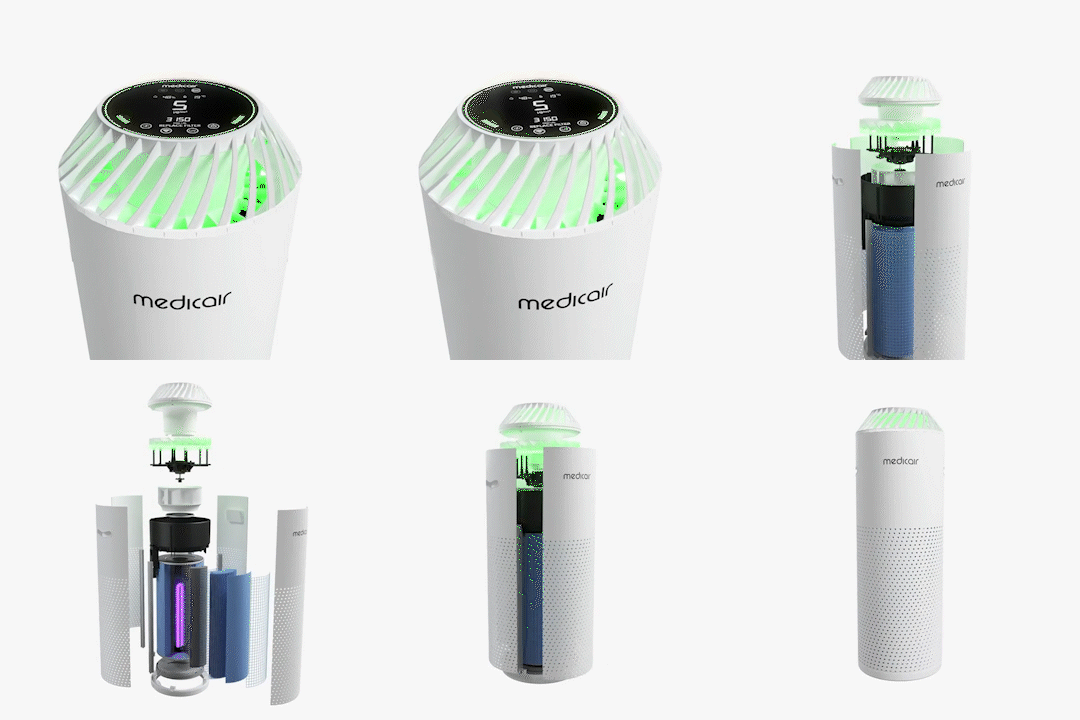
An air purifier, or air cleaner, is an appliance designed to remove, trap, and reduce airborne particulates and, in some models, certain microbes that may be present in indoor air. See our portable and whole-home air purifiers.
Do air purifiers replace ventilation?
No. Air purifiers improve filtration but do not replace the need for proper air exchange. Air exchange is the job of a ventilation system, such as an HRV or ERV.
Are UV light air purifiers safe?
UV light (ultraviolet light) is safe in our air purifiers because the UV light is enclosed and not exposed to direct contact with our eyes or skin. Our air purifiers with ultraviolet light are safe for consumer use and do not give off any ozone or other harmful substances.
UV light, however, is not safe to look at directly or to have shining on exposed skin.
Do UV air purifiers produce ozone?
Yes and no. Our MedicAir® Pro air purifier and our duct-mounted ultraviolet light systems do not produce ozone and are manufactured with high-quality standards: the MedicAir® Pro has a non-ozone-producing UV-C lamp chamber, and the Platinum PURE is validated to produce zero ozone.
There are, however, cheap and low-quality UV lights available on the market which can and do produce ozone.
Is a UV light for your home’s HVAC system necessary?
UV light has multiple benefits, including disinfecting the air that passes through your HVAC system. Whether it suits your home depends on your goals, your system, and your indoor air conditions, which is what the free in-home air test is for.
You can learn more about the benefits of ultraviolet light on our Platinum PURE UV page.
What is a HEPA filter?
HEPA is a pleated type of air filter (similar to that of your furnace filter). HEPA stands for High-Efficiency Particulate Air.
What is MERV?
MERV is a rating used for pleated filters to measure their effectiveness. MERV stands for Minimum Efficiency Reporting Value. You can learn more in our guide to furnace filters, HEPA, and MERV ratings.
What is the difference between MERV and HEPA?
MERV ratings measure a filter’s ability to capture particles within HVAC systems. HEPA filters capture a higher percentage of very small particles and are typically used in standalone purification systems or dedicated housings, such as a whole-home HEPA system on the furnace.
What does CADR mean?
CADR stands for Clean Air Delivery Rate. CADR is a measurement to determine how fast an air purifier can remove particulates from the air.
Does UV light kill mold and fungi?
Yes, when they are exposed to it. Molds, fungi, and other microbes that pass through the UV light become sterilized: the light destroys their DNA and prevents them from reproducing.
Free in-home air test
Schedule your free in-home air test
Our technicians measure and evaluate your indoor air conditions before recommending any solution. We assess airflow, filtration, and environmental factors so you understand what’s happening inside your home.
About 30 minutes, no cost, and no obligation.