
Home ventilation · HRV & ERV
HRV vs ERV: what’s the difference in home ventilation?
Heat Recovery Ventilators (HRVs) and Energy Recovery Ventilators (ERVs) bring fresh outdoor air into your home while exhausting stale indoor air. The difference is in what they transfer during the exchange: an HRV transfers heat only, while an ERV transfers both heat and moisture.
Free in-home air test: about 30 minutes, no cost, and no obligation. Serving Southwestern Ontario since 1999.
Our HRV/ERV technical guide is cited as a reference in Harvard Graduate School of Design research published in Sustainability (2025).
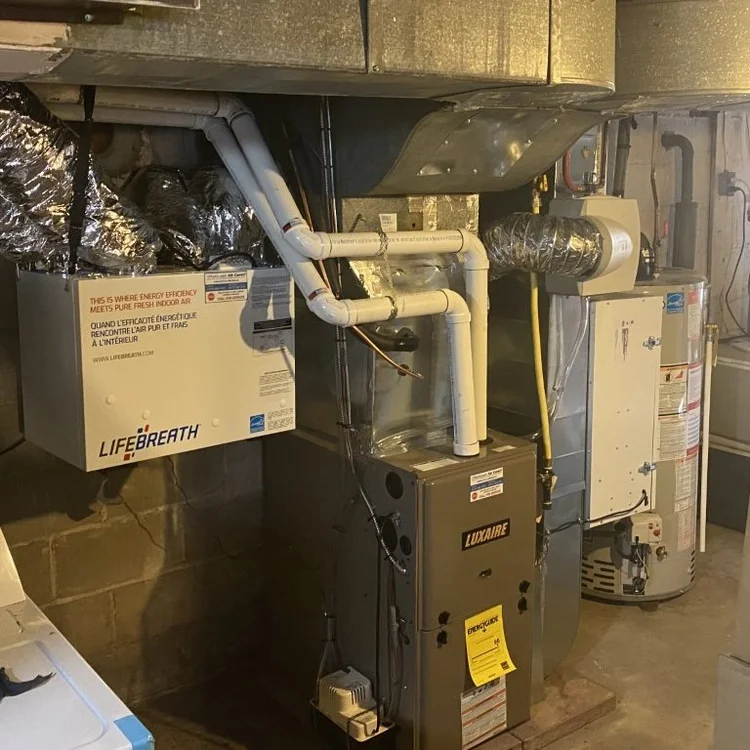
At a glance
HRV vs ERV: a side-by-side comparison
Understanding the difference between the two is key to choosing the right system for your home. Here is a simplified comparison:
| Feature | HRV | ERV |
|---|---|---|
| Heat transfer | Yes | Yes |
| Moisture transfer | No | Yes |
| Best for cold, dry winters | Strong option | Also effective |
| Best for humidity balance | Moderate | Better |
| Year-round versatility | Seasonal strength | More balanced across seasons |
In Southwestern Ontario, where winters are long and summers can be humid, both systems can work well — but the choice depends on your home’s construction and existing humidity patterns. Which system is better for Ontario homes?
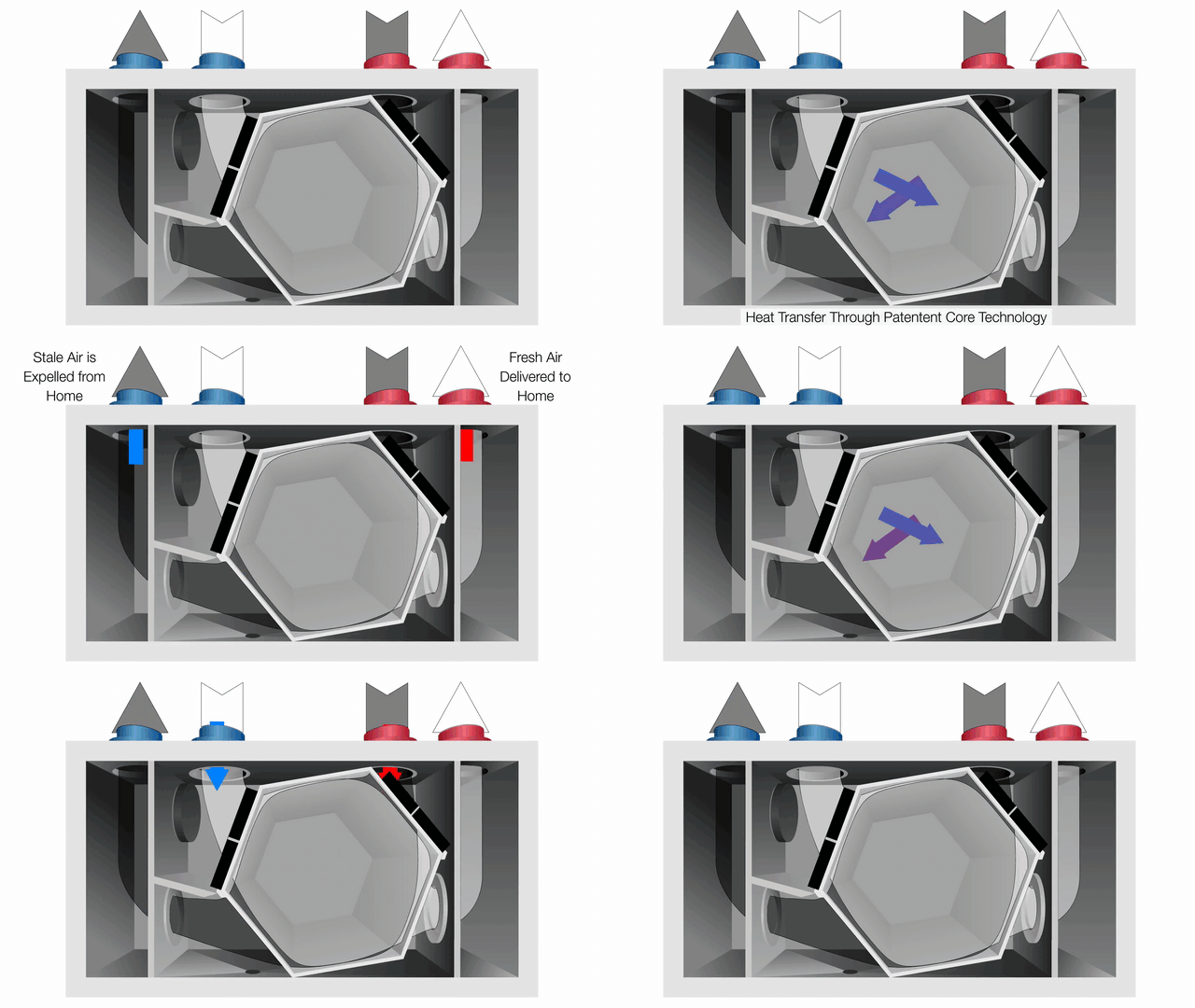
Heat recovery
What is an HRV (heat recovery ventilator)?
An HRV is a mechanical ventilation system that exchanges stale indoor air with fresh outdoor air while transferring heat between the two air streams.
How it works
- Stale indoor air is exhausted outside
- Fresh outdoor air is drawn in
- Heat from outgoing air is transferred to incoming air
- Air is distributed through the HVAC system
HRVs are typically best for
- Colder climates
- Homes where winter dryness is common
- Situations where heat retention is the priority
The key feature of an HRV is heat transfer — not moisture transfer.
In winter, an HRV helps maintain indoor temperatures while still allowing continuous fresh air exchange.
Energy recovery
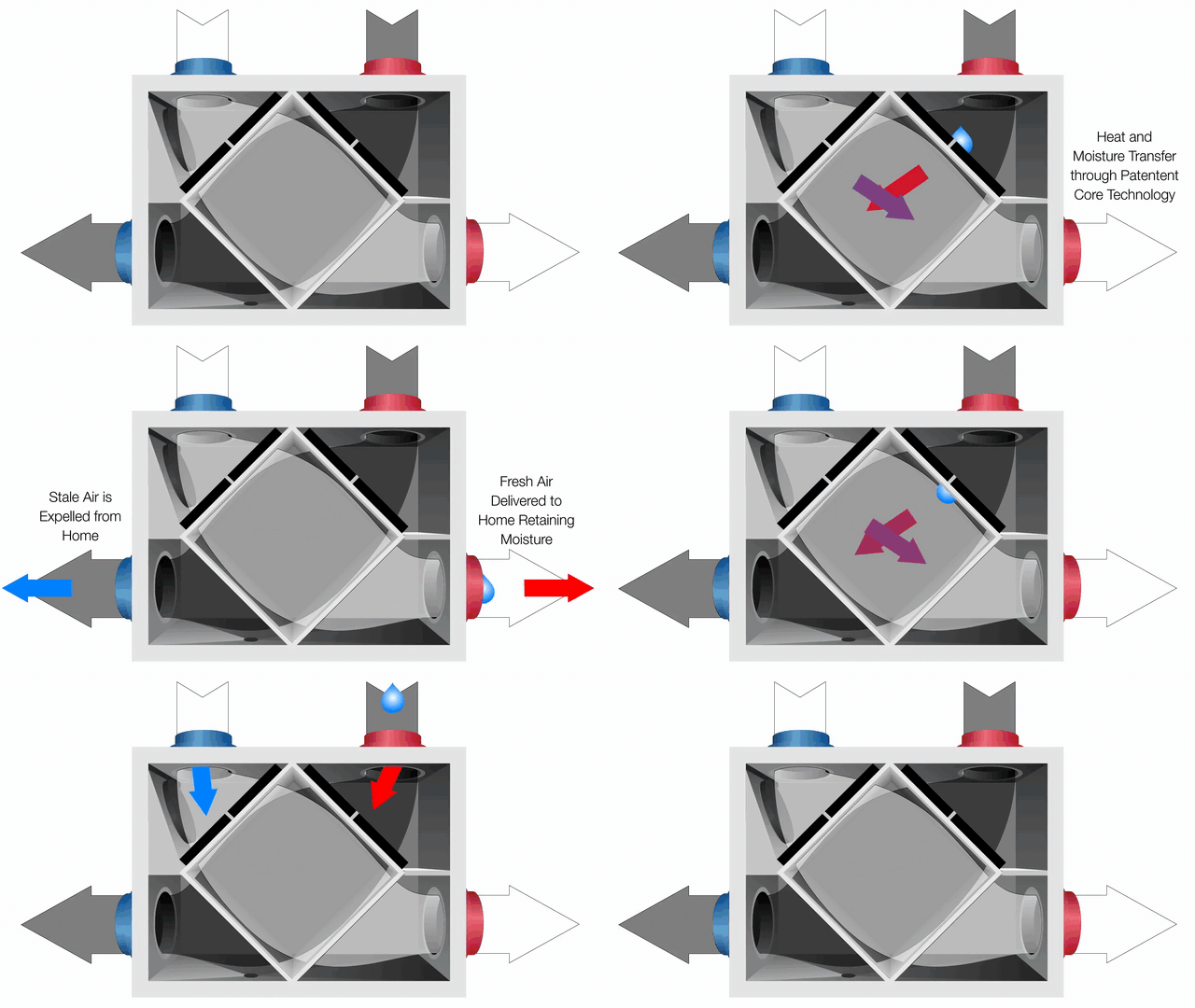
What is an ERV (energy recovery ventilator)?
An ERV functions similarly to an HRV but transfers both heat and moisture between incoming and outgoing air streams.
How it works
- Exhausts stale air
- Brings in fresh air
- Transfers heat and humidity
- Balances indoor moisture levels
ERVs are typically best for
- Regions with seasonal humidity changes
- Homes with moisture imbalance concerns
- Year-round indoor comfort optimization
Because it manages humidity as well as temperature, an ERV provides more balanced year-round control in many climates.
See our Platinum ERV energy recovery ventilatorSouthwestern Ontario
Which system is better for Ontario homes?
Ontario experiences:
- Cold, dry winters
- Humid summer conditions
- Increasingly airtight new construction
In older homes with natural air leakage, ventilation may be less urgent.
In newer homes — especially those built to modern efficiency standards — balanced mechanical ventilation becomes more important.
Many homeowners benefit from ERV systems due to their humidity regulation capabilities. However, homes with persistent winter dryness may lean toward HRV systems.
The right choice depends on
- Square footage
- Insulation levels
- Existing HVAC configuration
- Seasonal humidity patterns
- Occupant sensitivity
There is no universal answer — only the right answer for your home.
Free in-home air test: about 30 minutes, no cost, and no obligation.
Tight, efficient homes
Why ventilation matters in energy-efficient homes
Modern homes are built tighter than ever. While this improves energy efficiency, it also reduces natural air exchange. As a result, stale indoor air can linger longer than many homeowners realize.
Today’s homes feature
- Sealed building envelopes
- High-performance insulation
- Reduced air leakage
- Improved windows and doors
These improvements reduce heating and cooling costs — but they also reduce passive airflow.
Ventilation systems are designed to
- Replace stale indoor air
- Maintain oxygen levels
- Reduce lingering humidity
- Support healthier indoor environments
Ventilation is different from filtration.
Filtration cleans the air already inside your home. Ventilation replaces it. Both matter — but they serve different purposes.
Signs to watch for
When should you consider installing a ventilation system?
You may want to evaluate ventilation if you notice:
- Persistent stale air
- Lingering odors
- Excess humidity or condensation
- Uneven indoor comfort
- New construction or recent renovations
- A tightly sealed energy-efficient home
Ventilation is not about overreacting. It’s about ensuring air exchange matches modern building practices.
Ventilation inspections are commonly recommended for homes with comfort issues, poor air circulation, excess humidity, or aging HVAC ventilation systems.
Our free in-home air test checks airborne particles and dust, humidity and comfort, odor-related concerns, and ventilation performance.
Heating & cooling
Does an HRV or ERV affect heating and cooling?
When properly installed, both systems integrate with your existing HVAC system.
They are designed to:
- Recover energy from exhausted air
- Reduce heating/cooling loss
- Improve airflow balance
Professional installation ensures that ventilation enhances comfort without overburdening your system.
Installed and serviced by Platinum Air Care
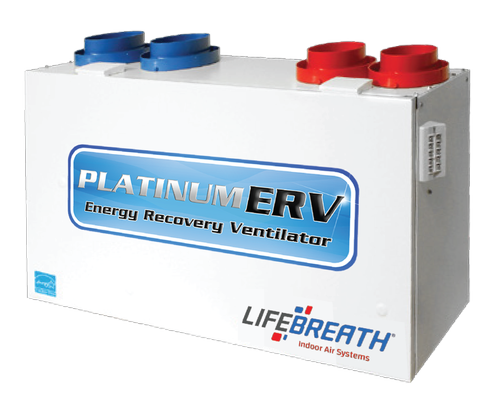 Platinum ERV
Duct-mounted, calibrated to each home, and ENERGY STAR® qualified. An HRV option is also available.
See the Platinum ERV
HRV and ERV service
Cores, filters, and the intake and exhaust runs — frequently the most neglected part of a ventilation system. A separate service from a duct cleaning that we can do on the same visit.
Duct cleaning and add-ons
Furnaces and air conditioners
Repair and replacement for the heating and cooling system your ventilation ties into. Emergency service available.
Heating and cooling services
Platinum ERV
Duct-mounted, calibrated to each home, and ENERGY STAR® qualified. An HRV option is also available.
See the Platinum ERV
HRV and ERV service
Cores, filters, and the intake and exhaust runs — frequently the most neglected part of a ventilation system. A separate service from a duct cleaning that we can do on the same visit.
Duct cleaning and add-ons
Furnaces and air conditioners
Repair and replacement for the heating and cooling system your ventilation ties into. Emergency service available.
Heating and cooling services
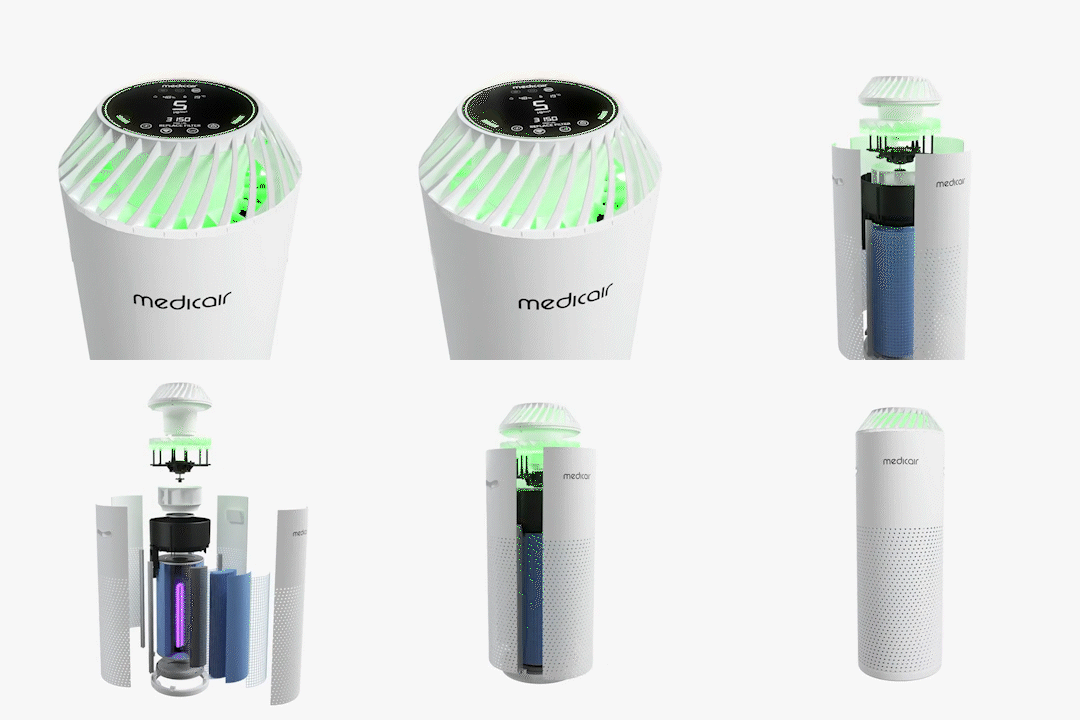 Medical-grade air purifiers
A portable all-in-one unit, or a whole-home system fitted into your furnace ductwork and out of sight.
Portable and whole-home air purifiers
Medical-grade air purifiers
A portable all-in-one unit, or a whole-home system fitted into your furnace ductwork and out of sight.
Portable and whole-home air purifiers
Ventilation vs purification
Do HRVs and ERVs replace air purifiers?
No.
Ventilation and purification serve different purposes.
- Ventilation
- Ventilation replaces indoor air with fresh outdoor air.
- Air purification
- Air purification filters particles from existing indoor air.
An effective indoor air strategy may include both.
If you would like a deeper explanation of what commonly circulates inside modern homes — from particulate matter to chemical compounds — you can read our guide on what is in the air we breathe.
Questions
Common questions about HRVs and ERVs
What is the difference between HRV and ERV?
Both HRVs (Heat Recovery Ventilators) and ERVs (Energy Recovery Ventilators) exchange stale indoor air with fresh outdoor air. The difference is in what they transfer during the exchange. An HRV transfers heat only, while an ERV transfers both heat and moisture. ERVs are often preferred in climates with seasonal humidity changes, while HRVs are commonly used in colder, drier conditions.
What is the lifespan of an HRV or ERV system?
Most HRV and ERV systems last between 10 and 15 years when properly maintained. Regular filter replacement and periodic servicing help extend system life and maintain performance.
Is an ERV worth it in Ontario?
In many Ontario homes, yes — particularly in newer, energy-efficient construction. ERVs help balance both temperature and humidity levels, which can improve comfort during humid summers and dry winters. The right system depends on your home’s design and ventilation needs.
How often should an HRV or ERV run?
Many systems are designed to run continuously at a low setting to maintain consistent air exchange. Others operate on timers or humidity sensors. The ideal runtime depends on your home’s size, occupancy, and air quality conditions. On the Platinum ERV, the most popular setting is the 20/40 run mode: it runs for 20 minutes of every hour.
Are HRVs or ERVs required by the Ontario Building Code?
The Ontario Building Code requires adequate ventilation in modern residential construction. In many newer homes, mechanical ventilation systems such as HRVs or ERVs are installed to meet these standards. Requirements can vary depending on the age and design of the home.
I have an older home. Do I still need a ventilation system?
Older homes often have more natural air leakage, which can provide passive ventilation. However, if renovations, new windows, or insulation upgrades have made the home more airtight, a mechanical ventilation system may be beneficial.
Does installing an HRV or ERV affect my heating or cooling system?
When properly installed, HRV and ERV systems integrate with your HVAC system to improve airflow without significantly increasing energy use. Because they recover heat energy during air exchange, they are designed to minimize heating and cooling loss.
Can an HRV or ERV reduce humidity?
An HRV can help remove excess indoor humidity during winter. An ERV is specifically designed to transfer moisture, helping to balance humidity levels more consistently throughout the year.
Do HRVs and ERVs improve indoor air quality?
They improve indoor air circulation by replacing stale air with fresh outdoor air. While they do not filter air to the same degree as dedicated air purifiers, they play an important role in maintaining balanced indoor environments.
Can you service or clean my HRV or ERV?
Yes. Cores, filters, and the intake and exhaust runs are all serviceable, and they are frequently the most neglected part of a ventilation system. It is a separate service from a duct cleaning, and we can do it on the same visit.
Free in-home air test
HRV or ERV? Not sure which one your home needs?
Our technicians measure your air on-site and go through the readings with you — about 30 minutes, no cost, and no obligation. Based on the results and your interest, we show you the options best suited for your home.
Every home is different. Before recommending any HRV or ERV system, we evaluate:
- Airflow patterns
- Existing filtration
- Humidity levels
- HVAC integration
- Building envelope tightness
Ventilation should be assessed — not guessed.