
Water filtration guide London & Southwestern Ontario
Should You Invest in a Home Water Filtration System?
Like air, the water sources and quality we consume are not always guaranteed to be in their purest form. There are many harmful impurities that could be in your water.
Having various types of water filtration depending on your needs means reduced chemicals, fresher feeling or tasting water, and no bad smell or taste finding its way into your tap. Investing in a residential water filter system is a commitment every family should consider.
4.9 from 2,300+ Google reviewsSince 1999100,000+ homes tested
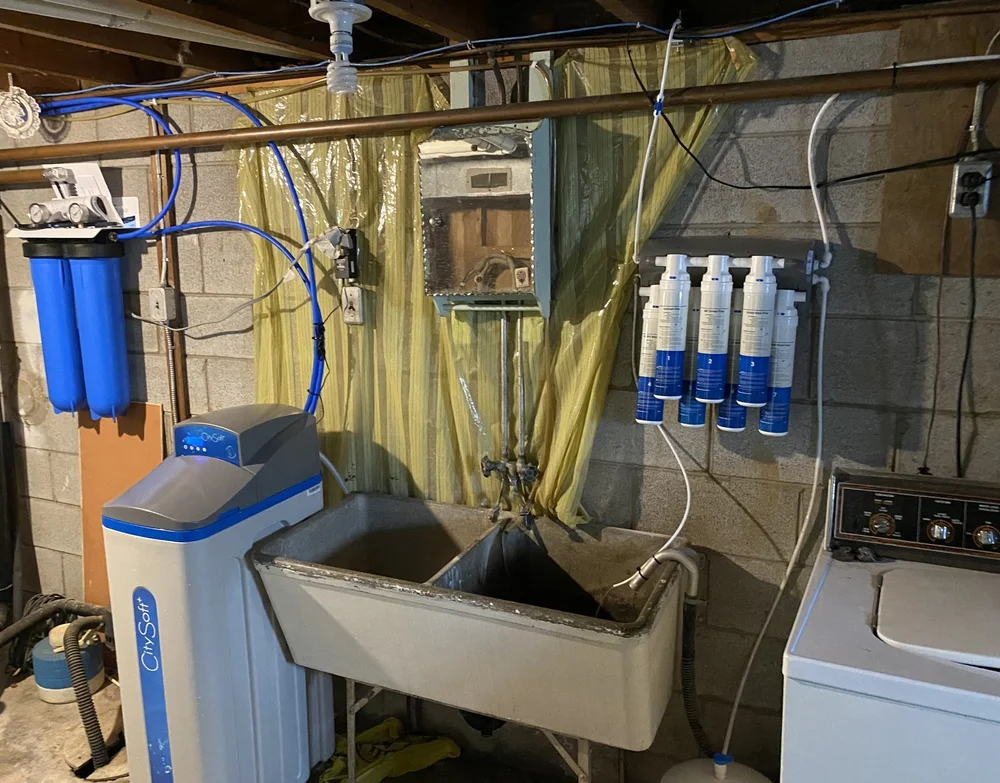
Is it worth it?
The benefits of a home water filtration system
What you get depends on the system: one treats the water you drink, one the hardness in every tap, one the chlorine. Here is what each of them changes at home.
-
Drinking water
Better-tasting water for drinking and cooking
Purified water improves the taste of coffees, teas, and juices. Potatoes, rice, pasta, and soups cooked with filtered water taste better. Wash your fruits and vegetables in it, too.
The 7-stage water station -
Drinking water
No more bottled water
Refill from the water station for the best water, every time. Eliminate plastic bottles and make room in your refrigerator. It can be connected to your refrigerator, ice maker, or coffee machine if desired.
The 7-stage water station -
Whole home
Softer-feeling water in every room
Improve the feeling of your water for the whole home while also reducing chlorine in the water. The CitySoft conditioner removes water hardness, bad taste, and odor caused by chlorine and organics.
The water conditioner -
Whole home
Less scale on taps and appliances
Hard water minerals, mainly calcium and magnesium, are left behind as limescale. A water softener removes them, which helps prevent scale build-up on sinks, showers, tiles, floors, dishwashers, washing machines, and coffee makers.
The water conditioner -
Whole home
Less chlorine taste and smell
Municipal treatment plants use chlorine and chloramines to disinfect the water, and they leave taste and odor behind at your tap. A whole-home chlorine filter reduces chlorine, chloramines, bad taste, and odors from your water.
The chlorine filter -
Whole home + drinking water
Fewer chemicals in your water
The whole-home chlorine filter reduces chlorine, chloramines, VOCs, and chemical byproducts found in municipal tap water. At the kitchen sink, reverse osmosis is designed to remove a very high percentage of dissolved solids, including salts, heavy metals, and certain chemical contaminants.
The chlorine filter

In the news
Lead in Canada’s drinking water: a Global News report
A 2019 Global News investigation found lead above Health Canada’s guideline in drinking water across Canada, including in homes. Lead is one of the substances the 7-stage drinking water station has been tested to reduce.
Read the Global News reportNot sure which of these your home needs? That is what the free in-home water test is for, and it costs nothing.
Book My Free Water TestThe basics
What is water filtration?
Water filtration is the process of purifying water by passing it through a filtering agent. House water filtration has grown more popular in recent years. There are many different types of water filtration systems and water treatment such as reverse osmosis systems, water softeners and conditioners, ultraviolet (UV) water systems, and more. Each type of filter is designed with a specific purpose in mind.
Three systems, three jobs
-
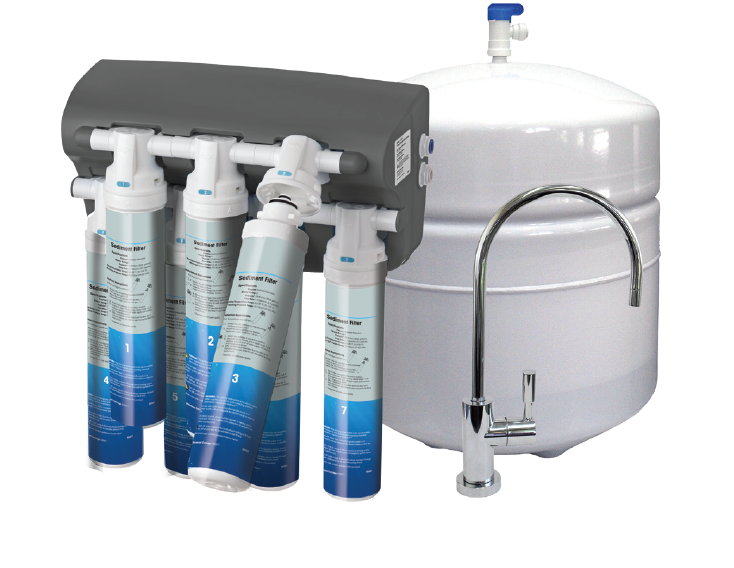
Reverse osmosis drinking water
Reverse osmosis drinking water stations are the most popular because each of us drinks a certain amount of water each day.
Clean, great-tasting water with the Advanced 7-Stage Water Station: reverse osmosis, then re-mineralizing filtration for alkaline, pH-balanced water at the kitchen tap.
See the 7-stage water station -
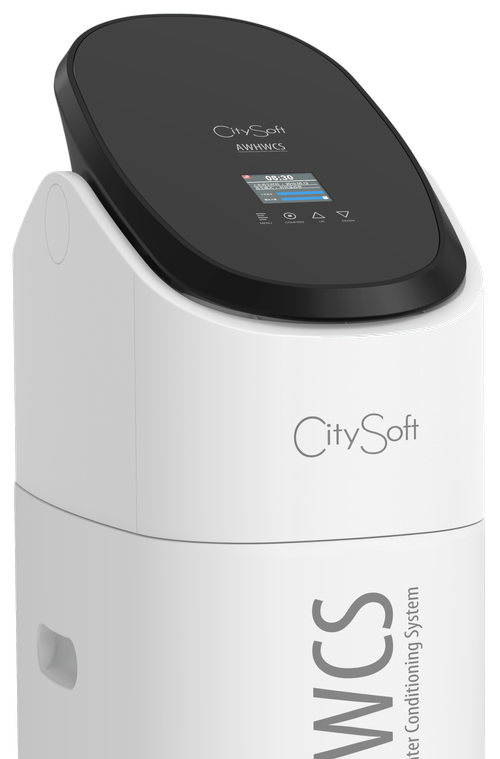
Water softeners and conditioners
Water conditioners improve water quality by making the water feel softer, which is better for showers and baths, fluffier laundry, and more for the entire house.
CitySoft for city water. CountrySoft adds iron removal for rural and well water.
See the water conditioner -
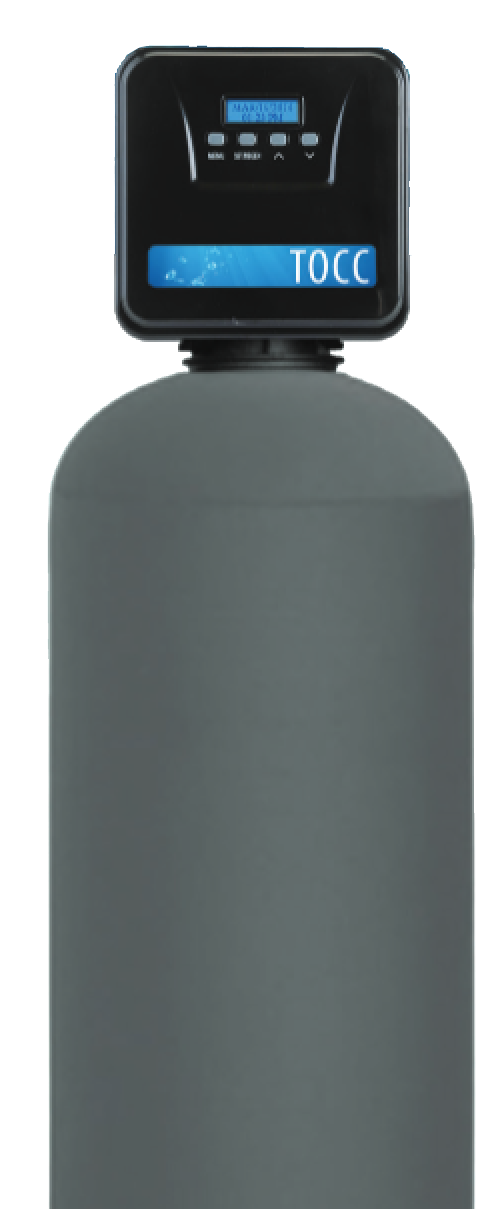
Whole-home chlorine and chloramine filters
A whole-home chlorine filter treats your water where it enters the home, so every tap and shower gets water with less chlorine taste and smell.
Its catalytically enhanced carbon media is made for chloramines: regular carbon only partly removes them.
See the chlorine filter
Ultraviolet (UV) water systems work by disinfecting the entire home’s water intake with UV light. Other types of water filters exist but are less common, and only used in specific situations such as rural homes with well water.
Compare every system on our water softeners and filtration page, or read our complete guide to reverse osmosis water filters.
Questions
Home water filtration: common questions
Is a home water filtration system worth it?
It depends on your water and on what you want from it. Having the right type of water filtration for your needs means reduced chemicals, fresher feeling or tasting water, and no bad smell or taste at your tap. A drinking water system also means no more bottled water to buy. The free in-home water test shows what your water needs, and it costs nothing.
What type of water filter do I need?
It depends on what you want to fix. For the water you drink and cook with, a reverse osmosis drinking water system such as our 7-stage water station. For hard water and scale, a water softener or conditioner. For chlorine taste and smell at every tap and shower, a whole-home chlorine and chloramine filter. Many homes pair them, and the free in-home water test shows which ones yours needs.
How much does a home water filtration system cost?
It depends on your water and on your home: city or well water, how hard it is, how much chlorine it carries, and how much water your household uses all change which system fits. Some homes need only a drinking water system; others pair it with a water conditioner or a chlorine filter. That is what the free in-home water test is for, and it costs nothing. Our article on what a whole-home water filtration system costs in Ontario explains what changes the price.
Do I need water filtration if I am on city water?
Homes in London rely on municipal water that meets safety standards, but minerals such as calcium and magnesium contribute to hardness, while chlorine and other treatment byproducts may impact odor and flavor. Those are the two things a water softener and a whole-home chlorine filter treat. Rural and well water present different challenges from city water; for those homes, CountrySoft adds iron removal.
How can I find out what is in my water?
Book the free in-home water test. A licensed technician tests your water in your own home and explains every reading before leaving. The water test checks hardness (calcium and magnesium), chlorine and taste, total dissolved solids, and staining and scale. It takes about 30 minutes for most homes, with no charge and no obligation, and you keep the results either way.
Free in-home water test
Find out what your water needs first
A licensed technician tests your water in your own home and explains every reading before leaving. Based on the results and your interest, Platinum Air Care offers solutions for air and water treatment.
What the water test checks
- Hardness (calcium and magnesium)
- Chlorine and taste
- Total dissolved solids
- Staining and scale
About 30 minutes for most homes. No charge, no obligation, and you keep the results either way.
Prefer to call?