
RPS Central Whole Home HEPA System
Whole-Home True HEPA Air Purifier With Carbon for Your Furnace
The RPS Central Whole Home HEPA System is a whole-home true HEPA air purifier with carbon: it cleans the air your furnace moves through every room.
Free in-home air test in London and Southwestern Ontario: about 30 minutes, and no obligation.
Hospital-grade HEPA cannot go in a furnace filter slot: the media is too dense, and your furnace could not pull air through it. This is the way around that: a self-powered unit on a bypass loop off your return duct, filtering the whole house at 99.97% at 0.3 microns, with a carbon stage for the smells HEPA cannot catch.
- Pre-filter, carbon, and true HEPA in one cabinet
- 99.97% at 0.3 microns, 45.2 sq ft of HEPA media
- Its own blower: no load on your furnace
- 10-year parts warranty
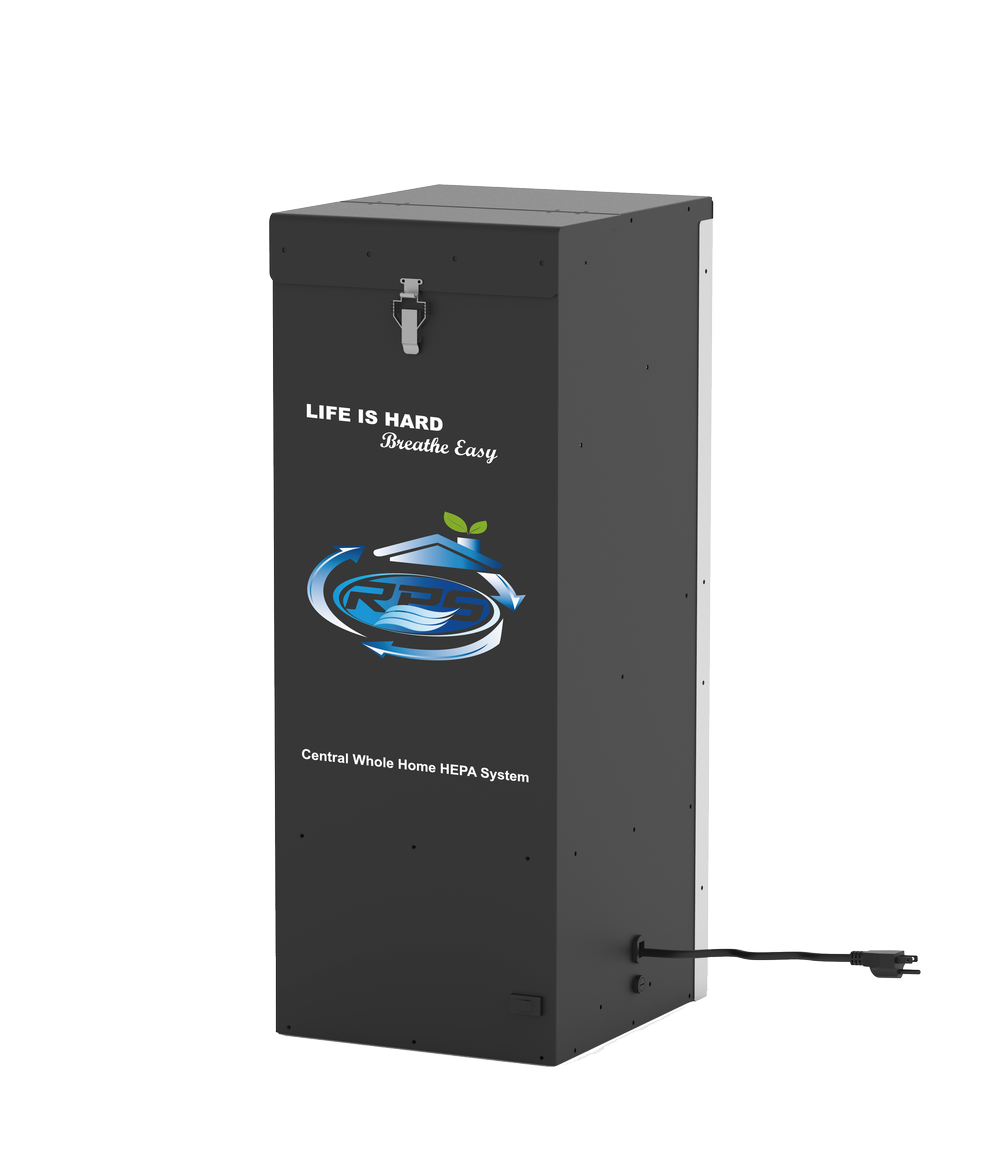
HEPA and your furnace
Why a Furnace Filter Is Not a HEPA Filter
A furnace filter exists to protect the furnace. It stops the lint and grit that would foul the blower and the coil, and it has to stay open enough for the fan to pull a whole house of air through it every cycle. True HEPA is the opposite: dense enough to catch a 0.3 micron particle, which means it needs its own fan to push air through it. Put real HEPA media in a furnace slot, and you starve the furnace of airflow.
So this unit sits beside the ductwork rather than inside it. It draws a portion of the return air continuously, cleans it properly, and gives it back, adding no static pressure to the system your furnace depends on.
The bypass, in numbers
-
1/5 to 1/3
of the air about to pass through the furnace is drawn off, cleaned, and returned to the airstream ahead of it
-
210 CFM
through its own blower: about 13,000 cubic feet of air an hour
-
65 W
the whole power draw, from its own cord to a 120 V outlet
-
No load
on your furnace: it does not load the air distribution system or affect heating efficiency
How it cleans
Three Stages of Whole-Home Air Filtration
Three stages, in order: a permanent washable pre-filter, then carbon, then true HEPA. All three lift out of the top of the cabinet.
-
Stage 01
Permanent washable pre-filter
Catches the big material first: lint, hair, visible dust. It washes out rather than being replaced, so it costs nothing to run and keeps the load off the two filters behind it.
-
Stage 02
Two-inch pleated carbon
Carbon handles what a filter cannot catch by size: cooking smells, pets, smoke, and the chemical vapors that come off cleaning products and new furniture. This stage is the difference between this unit and a HEPA-only system.
-
Stage 03
True HEPA: 99.97% at 0.3 microns
Over 40 square feet of genuine HEPA media. Pollen, dust mite debris, pet dander, mold spores, and smoke particles are captured here, at the grade used in clinical settings.
Is it right for your home?
Where the RPS Whole Home HEPA Is the Right Choice
It is not the only whole-home HEPA we fit. It is the one to pick when odors matter as much as particles, because of the carbon stage.
- You have forced-air heating and cooling
- Odors are part of the problem: cooking, pets, smoke
- Someone in the house has allergies or reacts to what is in the air
- You would rather not see the equipment at all
- A dental office or treatment room needs a set number of air changes per hour
- You want the same air everywhere, not room by room
Whole-home HEPA options
How It Compares to the Other Whole-Home HEPA We Fit
Both are true HEPA on a bypass. The difference is what sits in front of the HEPA.
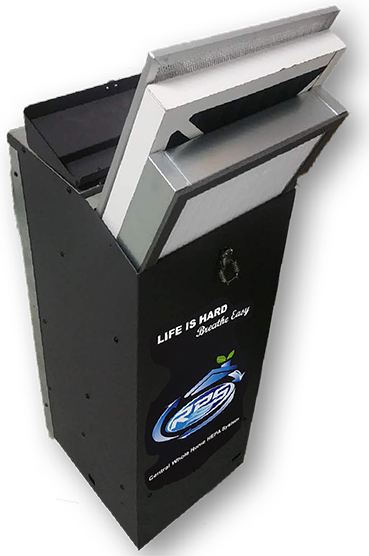
RPS Whole Home HEPA
Pre-filter · carbon · HEPA
This page
Carbon in front of the HEPA. Pick this one when odors and chemical vapors are part of what you are trying to fix, not just dust.
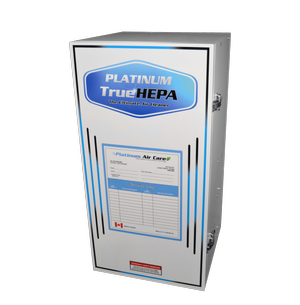
Platinum TrueHEPA
TFP collector · HEPA
A TFP collector in front of the HEPA instead of carbon, which extends HEPA life. Pick this one when the job is purely particles and long filter intervals matter most.
Two different jobs
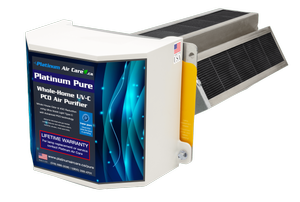
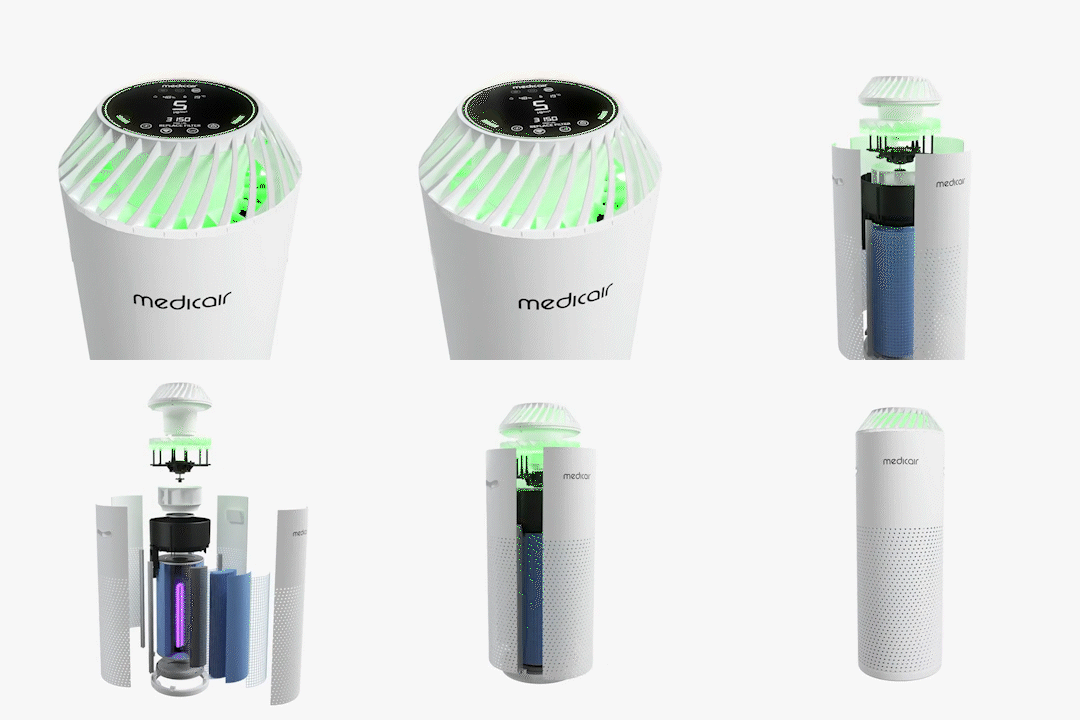
Neither treats the air the way UV-C and PCO do. Where odor and airborne contaminants are the main concern, a HEPA is usually paired with Platinum PURE or the RPS PUV. The MedicAir® Pro does both jobs in one portable cabinet. On a furnace, matching the MedicAir® Pro takes two units: this one and the RPS PUV.
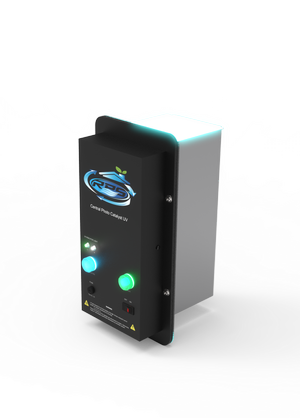
Specifications
RPS Central Whole Home HEPA System Specifications
- Model
- RPS-C3000
- Filtration
- Three stages: permanent washable pre-filter, carbon-impregnated media, true HEPA
- HEPA efficiency
- 99.97% removal of particulate at 0.3 microns and above
- HEPA media area
- 45.2 sq ft
- Airflow
- 210 CFM (about 13,000 cubic feet of air an hour)
- Configuration
- Bypass: draws off one fifth to one third of the air about to pass through the furnace, cleans it, and returns it to the airstream ahead of the furnace
- Effect on the furnace
- None. The unit has its own blower, so it does not load the air distribution system or affect heating efficiency
- Mounting
- Directly on the plenum of a forced-air system. Return plenum preferred; supply side possible
- Dimensions
- 30.2 cm W × 39.6 cm D × 79.3 cm H (11.9″ × 15.6″ × 31.2″)
- Weight
- 17.5 kg (38.6 lb)
- Power
- 65 W, 120 V grounded outlet
- Ozone
- None: mechanical filtration only
- Warranty
- 10-year parts, plus lifetime service, lifetime trade-in, and fire-protection coverage
What our customers say
Platinum Air Care is rated 4.9 from 2,300+ Google reviews across London and Southwestern Ontario, installing and servicing air purifiers since 1999.
Already have one?
Is This the RPS HEPA Unit Beside Your Furnace?
A lot of people inherit one of these with the house and have no idea what it is or who made it. If this matches what is in your basement, you have an RPS Central Whole Home HEPA System, and we stock filters for it.
- A tall black cabinet, about the height of a two-drawer filing cabinet, standing beside the furnace
- Three filters that lift out of the top of the unit, not the front
- The words “LIFE IS HARD · Breathe Easy” on the front panel
- An RPS logo with “Central Whole Home HEPA System” underneath it
- Flexible duct running into the return, rather than the unit sitting inside the ductwork
- Its own power cord to a wall outlet: it does not run off the furnace
Replacement filters for the RPS Whole Home HEPA
-
Stage 1
Pre-filter
Part no. 154101
Vacuum or wash every 90 days. Permanent: it is never replaced, only cleaned and dried.
-
Stage 2
Carbon filter
Part no. 184102
Replace about once a year. In a heavier environment (smokers, strong cooking odors, high pollution) every 3 to 6 months.
-
Stage 3
True HEPA filter
Part no. 184101
Replace every 3 to 5 years.
Calling? Have the model handy. We ship filters and parts anywhere in North America.
Common questions
RPS Whole Home HEPA Air Purifier FAQ
Will this work with my furnace?
It works with any central forced-air heating and cooling system. It is fitted to the return duct in a bypass configuration and runs on its own power, so it does not draw from the furnace or add static pressure to the air distribution system.
How much does a whole-home HEPA air purifier cost?
It depends on the equipment and on the house: a portable and a duct-mounted install are not the same job, and what suits one home is wrong for the next. That is what the free in-home air test is for, and it costs nothing.
Do I still need a furnace filter?
Yes. The furnace filter keeps the furnace itself clean and intercepts the largest particles, which reduces the load on this unit. They do different jobs: the furnace filter protects the equipment, and the HEPA protects the air.
How is this different from a HEPA furnace filter I buy at a store?
A filter that fits a furnace slot cannot be true HEPA and still let the furnace breathe: genuine HEPA media is too dense. That is why this is a separate unit with its own fan on a bypass loop; it can run real HEPA without choking the airflow your furnace depends on.
Will it help with allergies?
It captures the pollen, dust mite debris, and pet dander the system would otherwise keep moving through the house. Those are the things most people react to, so less of it in the air can only help.
Does it deal with smells, or only dust?
Both. The carbon stage is there for odors and chemical vapors (cooking, pets, smoke, cleaning products), which HEPA alone does not capture, because those are gases rather than particles.
How much air does it clean?
Its own blower moves 210 CFM, about 13,000 cubic feet of air an hour.
Does it have to run all the time?
No, but it works best if it does. RPS recommends running the air handler blower continuously, and since the unit has its own blower it keeps cleaning between heating and cooling cycles rather than only during them. If you would rather it ran only with the heating and cooling cycle, it can be installed that way.
What does it cost to run?
It draws 65 watts, about what a ceiling fan uses, and that is the whole draw, because the unit has its own blower rather than leaning on the furnace. Run continuously, that is roughly 1.5 kWh a day. Set to run only with the heating and cooling cycle, it uses less.
How much maintenance is there?
The pre-filter washes and goes back in. The carbon and HEPA filters are replaced on a schedule rather than cleaned, and there is nothing to scrub out. We recommend an annual service visit to check it.
Where do I get replacement filters for an RPS Whole Home HEPA?
From Platinum Air Care. Filters are stocked: the carbon filter is part no. 184102 and the true HEPA filter is part no. 184101 (the pre-filter is washed, not replaced). Tell us the model and we will get the right ones to you, or fit them on a service visit. We ship filters and parts anywhere in North America.
Free in-home air test London and Southwestern Ontario
Not sure a HEPA is what your house needs?
Our technicians measure your air on-site and go through the readings with you: about 30 minutes, no cost, and no obligation. Based on the results and your interest, we show you the options best suited for your home.
4.9 from 2,300+ Google reviews · 100,000+ homes tested · Since 1999